PROGRAMM WORKS©
Set the Groundworks.
Create a brief specific enough to build from and unique enough not to be copied.
Set the Groundworks.
Create a brief specific enough to build from and unique enough not to be copied.
Groundworks is a six-week brief development from Programm Works, led by ARB-registered architect, Bethan Nelson.
Written for founders, operators and developers creating hospitality, wellness and co-living spaces where people are already planning their return, before their first visit's even over.
Groundworks is a six-week brief development from Programm Works, led by ARB-registered architect, Bethan Nelson.
Written for founders, operators and developers creating hospitality, wellness and co-living spaces where people are already planning their return, before their first visit's even over.


THE APPROACH
THE APPROACH
A space designed for aesthetics will produce a beautiful photograph.
A space designed for the person inside on an ordinary Tuesday will produce something harder to quantify and more commercially durable.
A space designed for aesthetics will produce a beautiful photograph.
A space designed for the person inside on an ordinary Tuesday will produce something harder to quantify and more commercially durable.
Groundworks maps out the realities of building environments that offer more than just amenities, they offer experiences; with detailed specifications, operational conditions and spatial requirements, that your design team and contractor can build from.
Groundworks maps out the realities of building environments that offer more than just amenities, they offer experiences; with detailed specifications, operational conditions and spatial requirements, that your design team and contractor can build from.
Groundworks
Groundworks
Includes:
Includes:
(001)

Assumptions Audit
Every assumption the project is resting on gets marked as confirmed, challenged or overturned; so the expensive surprises surface in week two, not month nine. We are looking for the beliefs that are load-bearing: the ones where being wrong changes the plan rather than the paint. Most projects carry between thirty and fifty. Most founders have never seen them in a list.
Includes
Pre-brief questionnaire
Project framing
User
Market
Programme
Operation
1:1 session
Assumptions Audit
(002)


Market-Gap Read
We position your brand on axes that are not price against quality. If your positioning would still be true if a competitor said it, it isn't a position, it’s a description of your sector. We work to establish a positioning so precise, your competitors can’t imitate it.
Includes
Comp analysis
Micro-market research
Planning policy & constraints
Sector data
Market gap map
Spatial opportunity
Strategy document
Market-Gap Read
(003)


Sensory-System Direction
The physical consequences: what the arrival has to do acoustically, what the light has to do at four in the afternoon and nine at night, where the material budget earns its keep and where it is decoration. Targets, not adjectives. So "calm" becomes a target your design team can hit and check.
Includes
Acoustics
Lighting
Air quality
Thermal comfort
Material & form
Operations map
Strategy document
Sensory-System Direction
(004)


Five Design Principles
Five, not twelve. Each carries an intent, an instruction and the consequence of losing it; so value engineering becomes a conversation about what you'd lose from the experience, not what you'd save in the budget.
Includes
Design intent
Instruction to achieving it
Consequence of losing it
1:1 session
Five Design Principles
(005)


The Claims Register
Two columns against every recommendation in your brief; graded A to D for the strength of the evidence behind it. So you know which recommendations rest on evidence and which on judgement, before you spend on them.
Includes
Spatial recommendations
Experiential recommendations
Operational recommendations
Evidence graded
1:1 session
The Claims Register
(006)


The Brief & Lineage
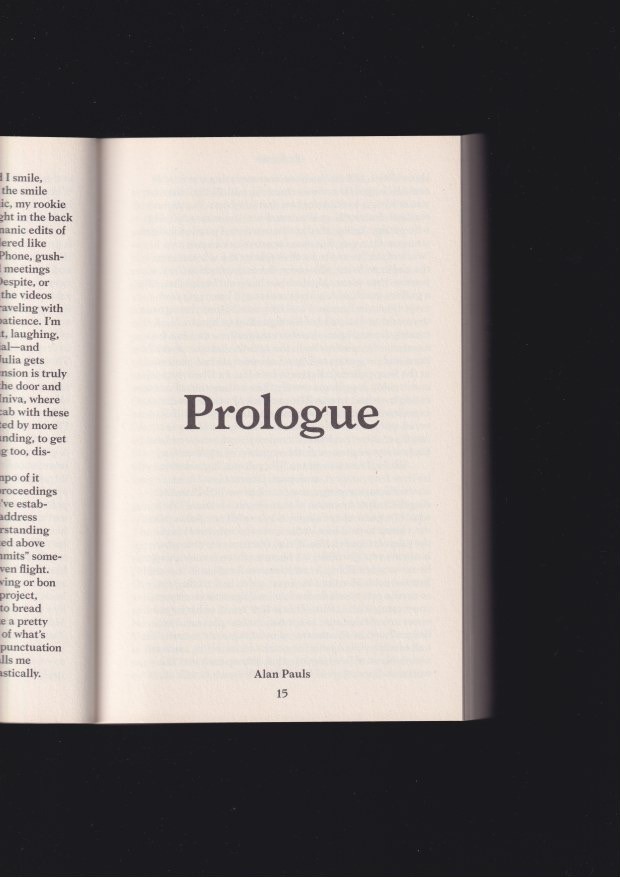
A physical document with a cover and a contents: dated and version-numbered. Made to sit on a table and be argued over rather than scrolled past. At the back there is a lineage page. It names every source this brief's thinking came from, so every consultant works from one document, and the thinking can be traced.
Includes
The Brief as a single source of truth
Versioned PDF set
90-day route forward
Strategy document
The Brief & Lineage
(001)
Assumptions Audit
Every assumption the project is resting on gets marked as confirmed, challenged or overturned; so the expensive surprises surface in week two, not month nine. We are looking for the beliefs that are load-bearing: the ones where being wrong changes the plan rather than the paint. Most projects carry between thirty and fifty. Most founders have never seen them in a list.
Includes
Pre-brief questionnaire
Project framing
User
Market
Programme
Operation
1:1 session
Assumptions Audit
(002)
Market-Gap Read
We position your brand on axes that are not price against quality. If your positioning would still be true if a competitor said it, it isn't a position, it’s a description of your sector. We work to establish a positioning so precise, your competitors can’t imitate it.
Includes
Comp analysis
Micro-market research
Planning policy & constraints
Sector data
Market gap map
Spatial opportunity
Strategy document
Market-Gap Read
(003)
Sensory-System Direction
The physical consequences: what the arrival has to do acoustically, what the light has to do at four in the afternoon and nine at night, where the material budget earns its keep and where it is decoration. Targets, not adjectives. So "calm" becomes a target your design team can hit and check.
Includes
Acoustics
Lighting
Air quality
Thermal comfort
Material & form
Operations map
Strategy document
Sensory-System Direction
(004)
Five Design Principles
Five, not twelve. Each carries an intent, an instruction and the consequence of losing it; so value engineering becomes a conversation about what you'd lose from the experience, not what you'd save in the budget.
Includes
Design intent
Instruction to achieving it
Consequence of losing it
1:1 session
Five Design Principles
(005)
The Claims Register
Two columns against every recommendation in your brief; graded A to D for the strength of the evidence behind it. So you know which recommendations rest on evidence and which on judgement, before you spend on them.
Includes
Spatial recommendations
Experiential recommendations
Operational recommendations
Evidence graded
1:1 session
The Claims Register
(006)
The Brief & Lineage
A physical document with a cover and a contents: dated and version-numbered. Made to sit on a table and be argued over rather than scrolled past. At the back there is a lineage page. It names every source this brief's thinking came from, so every consultant works from one document, and the thinking can be traced.
Includes
The Brief as a single source of truth
Versioned PDF set
90-day route forward
Strategy document
The Brief & Lineage
The brief is written against the body, not the aesthetic.
Every principle the brief produces names an instruction, not an adjective.
"Calm" is a vibe.
"A customer's shoulders should come down within the first 90 seconds, and the lounge holds RT between 0.4 and 0.6 seconds to make that possible" is a brief you can build from.
Every principle the brief produces names an instruction, not an adjective.
"Calm" is a vibe.
"A customer's shoulders should come down within the first 90 seconds, and the lounge holds RT between 0.4 and 0.6 seconds to make that possible" is a brief you can build from.
Who this is for:
Who this is for:
Hospitality
Co-living
Longevity & Wellness
If you're planning something for 2027, set the groundworks early and get in touch.
Founders
With an idea
You know what you want it to feel like. You have not yet written down what has to be true for that feeling to survive contact with an operating model.

Founders
With an idea
You know what you want it to feel like. You have not yet written down what has to be true for that feeling to survive contact with an operating model.
Founders
With an idea
You know what you want it to feel like. You have not yet written down what has to be true for that feeling to survive contact with an operating model.
Operators
Brand-driven
You are not trying to be liked by everyone and you already know your vision. What you want is someone who will hold a position with you, and be honest about which parts work, and which don't.

Operators
Brand-driven
You are not trying to be liked by everyone and you already know your vision. What you want is someone who will hold a position with you, and be honest about which parts work, and which don't.
Operators
Brand-driven
You are not trying to be liked by everyone and you already know your vision. What you want is someone who will hold a position with you, and be honest about which parts work, and which don't.
Developers
With a site
You need a concept that survives underwriting, and something specific to say about the asset that isn't the same wellness paragraph as every other deck on the desk.

Developers
With a site
You need a concept that survives underwriting, and something specific to say about the asset that isn't the same wellness paragraph as every other deck on the desk.
Developers
With a site
You need a concept that survives underwriting, and something specific to say about the asset that isn't the same wellness paragraph as every other deck on the desk.
Startup Brands
Experiential-driven
Some of the best briefs we have written are for people opening one thing, carefully, with their own money. If that is you do get in touch.

Startup Brands
Experiential-driven
Some of the best briefs we have written are for people opening one thing, carefully, with their own money. If that is you do get in touch.
Startup Brands
Experiential-driven
Some of the best briefs we have written are for people opening one thing, carefully, with their own money. If that is you do get in touch.
Groundworks
Groundworks
Pricing
Lump sum
Instalments
£8,500
(+VAT)
Assumptions audit
Market-gap read
Sensory-system direction
Five design principles
The claims register
Design-team-ready brief document
Delivery time
6 weeks
Lump sum
Instalments
£8,500
(+VAT)
Assumptions audit
Market-gap read
Sensory-system direction
Five design principles
The claims register
Design-team-ready brief document
Delivery time
6 weeks
Lump sum
Instalments
£8,500
(+VAT)
Assumptions audit
Market-gap read
Sensory-system direction
Five design principles
The claims register
Design-team-ready brief document
Delivery time
6 weeks
Who you'll be working with:
Bethan is the founder and director of Programm Works, an ARB registered architect with a background in brand strategy.
She is uniquely placed to translate brands into spaces; designed for the nuanced commercial goals of each place, as well as the people spending time there.
Bethan has worked with global institutions such as MoMA NYC, Vitra Design Museum, Milan Design Week, as well as small independents including Ante Coffee, Miler Running, and Studio R330; and continues to consult on, and design for, projects across the globe.
Continents worked across
Continents worked across
Continents worked across
Brands built and consulted on
Brands built and consulted on
Brands built and consulted on
Industries worked with
Industries worked with
Industries worked with
Gross development value completed
Gross development value completed
Gross development value completed
FAQ.
FAQ.
FAQ.
Got questions? We’ve got answers. Here’s everything you need to know about Groundworks.
Groundworks is a six-week brief written before you appoint an architect or interior designer. It turns what you believe about your place, who it's for and how it should feel, into instructions a design team can build from and a contractor can price. It's led by Bethan Nelson, an ARB registered architect who came to architecture from brand strategy, so the brand is carried all the way into the building.
It's for founders, operators and developers creating hospitality, wellness and co-living places, usually with a construction budget up to £5m. It's also for independents opening a first site carefully, with their own money. It's not the right fit if your drawings are already coordinated and the contractor has priced it, or if you need visuals for a funder, because Groundworks is a strategy, not a design.
• A 25-minute call first, to check it's the right fit. • A questionnaire before we begin. • Three online working sessions, about eight hours of your time in total. • Research between sessions on your market, your site and the sensory side of the space. • The finished brief, handed over in person if the UK or Europe, with a 90-day plan for what to do next.
Whatever exists already: the site or lease details, budget figures, your brand book, your business model and any competitor analysis. If something doesn't exist yet, that tells us something too, so don't wait for it before getting in touch.
A bound brief made up of six documents: • every assumption the project rests on, tested; • where you sit in the market, on measures other than price and quality; • sensory targets for sound, light, air, temperature and materials; • five design principles, each saying what's lost if it's cut; • a register grading every recommendation by the strength of its evidence; • a lineage page naming every source behind the thinking. It's written so any design team can work from it.
Before you appoint an architect, or in the early concept stages before the design is fixed (RIBA Stages 0–2). Once the drawings are coordinated, every change costs more, and a brief can only record what's been lost.
Yes. I'm happy to sign a non-disclosure agreement before you share anything about an unannounced site or project.
The cancellation terms are set out in your agreement before we start. Because the research is reserved for your project, fees aren't refunded if you cancel. If I ever have to stop, you're refunded for any work not delivered.
Me, Bethan Nelson, throughout. I'm based on the west coast of Scotland and work with clients across the UK and Europe. Sessions are online. Handover is in person.
No. The brief is yours and works with any design team. If you'd like to continue, we can take the project on into feasibility, then architecture and interiors.
Let's talk about what you're building.
Twenty-five minutes. Bring the idea, the site, or simply the feeling you're after.
Nothing to prepare.
What happens next
Tell me a little about the project below and pick a time that suits. I'll read what you've sent before we speak, so we can start with your place rather than introductions. If Programm Works isn't the right fit, I'll say so, and point you somewhere that is.
early is good
The best time to talk is before anything's been drawn. If you're still a year out, get in touch anyway. Some of the most useful conversations happen when there's nothing on paper yet.